How to Choose a Baler for Your Recycling Yard
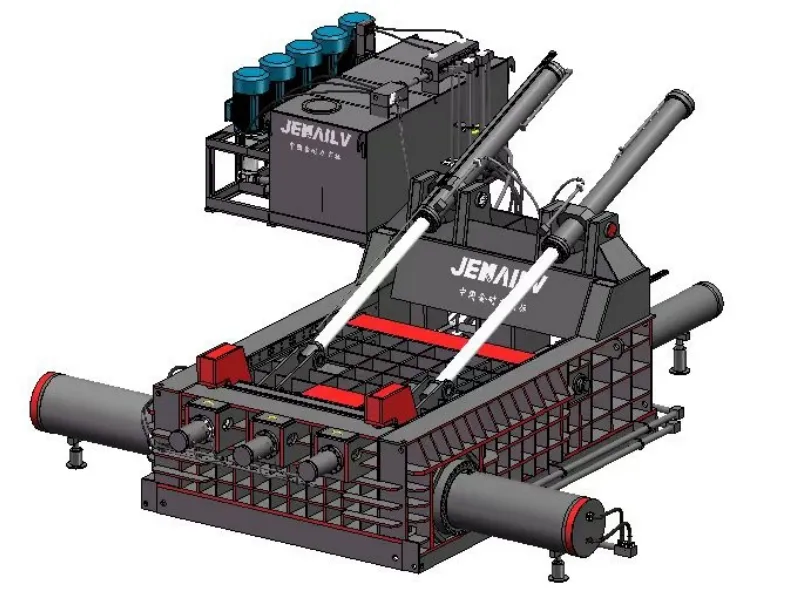
Most buyers start by asking for a price. The problem is that price without a specification tells you nothing — a machine that looks cheap usually costs more within a year. Work out these four numbers first.
1. Throughput, in tonnes per hour
Measure what actually arrives at your yard on a peak day, not the average. A baler sized for the average will back up every Monday morning, and a backed-up line is how you lose sorting staff.
Rough guide:
- Under 3 t/h — a vertical baler is usually enough
- 3–10 t/h — horizontal baler with automatic ejection
- Above 10 t/h — horizontal baler plus a conveyor, and plan for two shifts
2. What you are baling
Waste paper and OCC behave very differently from plastic film. Film is springy and needs higher compression force to reach the same density; it also wraps around the ram if the chamber is not designed for it.
Tell the supplier your material mix. “Mixed dry waste” is not a specification.
3. Bale density, and who pays the freight
Density is where the money is. If you ship bales, the difference between 380 kg/m³ and 450 kg/m³ is roughly 15% fewer truckloads for the same tonnage — every month, for the life of the machine.
Ask for the density the machine achieves on your material, not the catalogue figure. Catalogue numbers are usually measured on clean OCC.
4. How the bale gets out
Automatic ejection sounds like a luxury until you watch a manual machine run. On a manual unit the operator stops production to tie every bale. On a machine running 20 bales a shift, that is a large part of the shift not baling.
What to send a supplier
To get a quote you can actually compare, send:
- Peak and average throughput in t/h
- Material mix and rough proportions
- Bale size and weight your buyer accepts
- Whether you load by hand, conveyor or forklift
- Power supply available on site
A supplier who quotes without asking these is quoting a guess.
- Selection guide
- Waste paper